Tamiya’s origins reach back to 1946, when Tamiya Shoji & Co. was founded in Shizuoka as a lumber business. A wooden-model division followed in 1948, and by 1953 the company had become a specialist model maker. Tamiya moved decisively into plastic kits with its 1/800 Yamato in 1960 and built an international reputation for precision engineering, clear instructions and exceptionally high presentation standards.
For radio-control enthusiasts, the defining milestone came in November 1976 with Tamiya’s electric Porsche 934 Turbo. Tamiya itself identifies the model as the release that triggered its R/C car boom. The company subsequently developed one of the hobby’s most recognisable model lineages, spanning scale racing cars, buggies, off-roaders, trucks, touring cars, tanks and specialist vehicles.
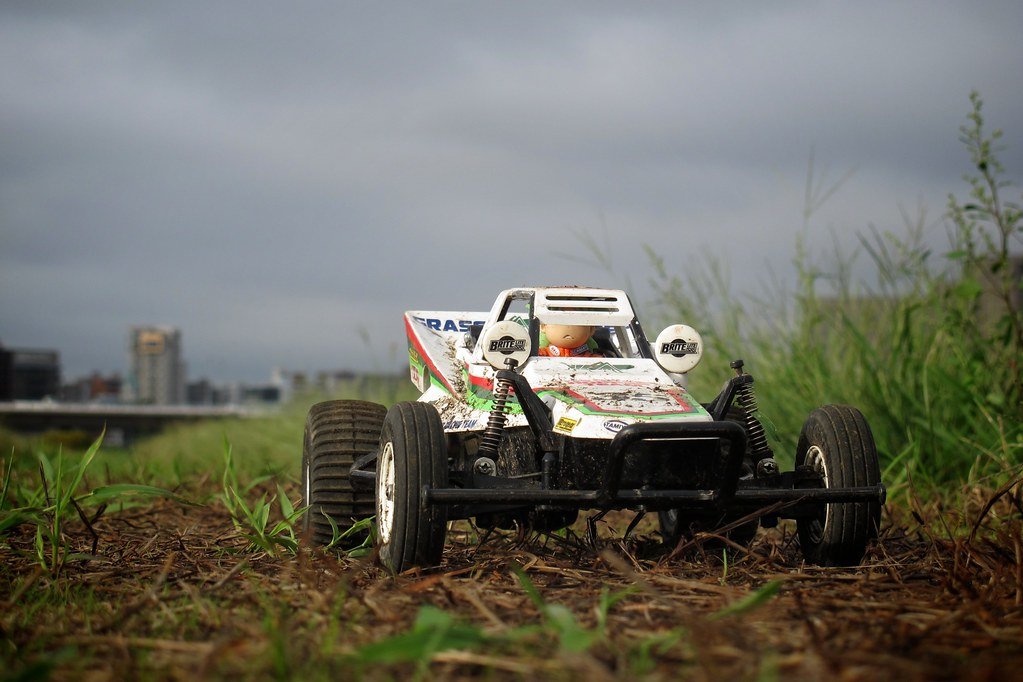
Models such as the Rough Rider, Sand Scorcher, Frog, Hornet, Hotshot, Bruiser, Clod Buster and Avante illustrate how Tamiya combined accessible kit building with increasingly sophisticated chassis engineering. Its importance also lies in the complete experience surrounding the models: distinctive box art, manuals, spare parts, option components and a strong visual identity.
Tamiya remains particularly significant to collectors because its long production history provides a near-continuous record of the evolution of electric R/C. Original kits now coexist with re-releases and anniversary models, allowing several generations of enthusiasts to experience historically important designs.